Dojo Kun
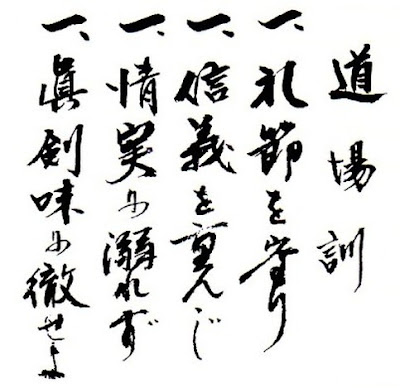
道場訓
Reisetsu-o-mamori 礼節を守り
Shingi-o-omonji 信義を重んじ
Jojitsu-ni-oberezu 情実に溺れず
Shinkenmi-ni-tesseyo 真剣味に徹せよ
Reisetsu O Mamori - Stick to the rules of the Dojo.
Shingi O Omanji - Be loyal to your instructor.
Jojitsu Ni Oberesu - Students and instructors are not all one (never take advantage of his friendship).
Shinkenmi Ni Tesseyo - Be serious in your efforts.
DOJO KUN - These Maxims are motto's, the spirit of which serious students of Karate should try to follow if they wish to gain the maximum from their training. The Maxims are like the English saying 'Service not self', 'Deeds not words', 'Be prepared' and exemplify an attitude which dictates a way of life.
REISETSU O MAMORI - Stick to the rules of the dojo. Good etiquette must be observed at all times by following the club's rules.
SHINGI O OMANJI - A student must have loyalty to his instructor. This is the most important thing in Martial Arts. It is not possible for someone to change his style in Japanese Martial Arts - people who do so cannot learn the correct etiquette and spirit of Martial Arts.
JOJITSU NI OBERESU - Teachers and students are not all one. Outside the Dojo you can be friendly with your Sensei but do not take advantage of this friendship.
SHINKENMI NI TESSEYO - Be serious in your efforts. No flippancy, chattering, smoking, gum chewing, eating or drinking in the Dojo. Concentrate solely on Karate and train hard in everything you do. The dojo is not a social gathering hall and visitors as well as students shall respect the rules and Maxims.

Jojitsu Ni Oberesu - Students and instructors are not all one (never take advantage of his friendship).
Shinkenmi Ni Tesseyo - Be serious in your efforts.
DOJO KUN - These Maxims are motto's, the spirit of which serious students of Karate should try to follow if they wish to gain the maximum from their training. The Maxims are like the English saying 'Service not self', 'Deeds not words', 'Be prepared' and exemplify an attitude which dictates a way of life.
REISETSU O MAMORI - Stick to the rules of the dojo. Good etiquette must be observed at all times by following the club's rules.
SHINGI O OMANJI - A student must have loyalty to his instructor. This is the most important thing in Martial Arts. It is not possible for someone to change his style in Japanese Martial Arts - people who do so cannot learn the correct etiquette and spirit of Martial Arts.
JOJITSU NI OBERESU - Teachers and students are not all one. Outside the Dojo you can be friendly with your Sensei but do not take advantage of this friendship.
SHINKENMI NI TESSEYO - Be serious in your efforts. No flippancy, chattering, smoking, gum chewing, eating or drinking in the Dojo. Concentrate solely on Karate and train hard in everything you do. The dojo is not a social gathering hall and visitors as well as students shall respect the rules and Maxims.

Peace and harmony,
Sensei M.Maharaj


